The gala is running fine until the honoree steps up to speak, holds the mic down by her chest, and the back half of the room stops catching full sentences. Nobody out there is thinking about mic technique or speaker coverage. They are just deciding the night feels unpolished.
Most event AV mistakes look like that. Not a dramatic failure, just small decisions made weeks earlier that add up. Here are the ones we see most often at schools, conferences, festivals, and fundraisers around the Greater Philadelphia Area.
Why Most Event AV Mistakes Start in Planning
Ask what went wrong after a rough show and the answer is usually about equipment. The mic cut out. The projector looked washed out. Trace it backward and you land somewhere else: a budget line that said AV with no description of the program, a walkthrough that never happened, or a run of show that changed late and never reached the crew.
Production decisions depend on details only the organizer has: audience size and layout, spoken word or live music, and whether anything is recorded or streamed. A team that gets those answers early builds around them. A team that gets them at load-in is improvising. Our event production planning checklist walks through what to settle and when.
Sound Mistakes That Lose the Back of the Room
Audiences tolerate a dim stage. They will not sit through forty minutes of straining to hear.
Guessing at coverage instead of designing for the room
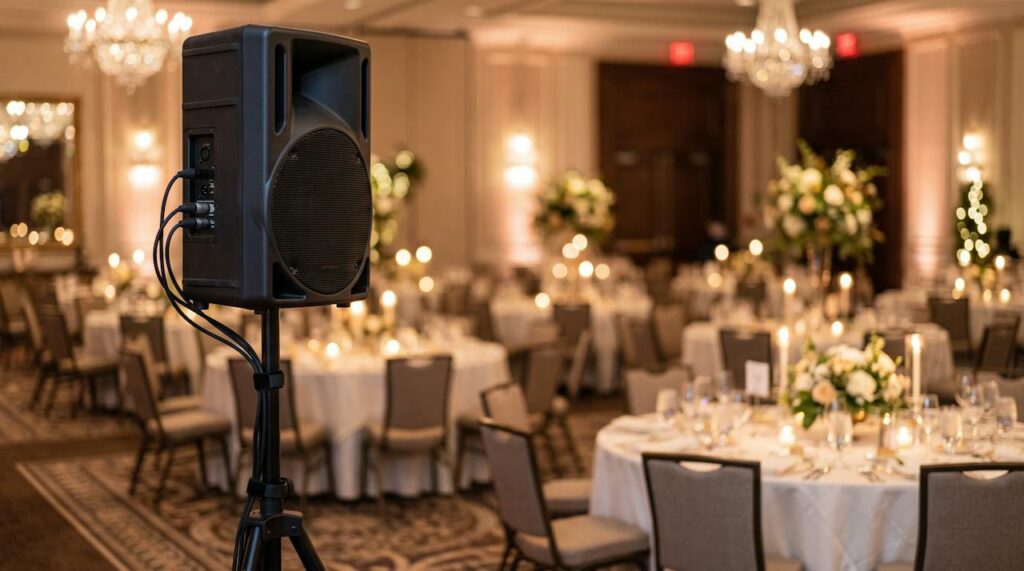
Coverage is about consistent volume and clarity in every seat, not about how loud a system gets. A long narrow room needs a different approach than a wide fan-shaped one, and deep rooms often need delay speakers partway back so the last rows are not hearing sound that traveled 120 feet. Spoken word needs intelligibility first. Live music needs headroom, subwoofers, and monitors so performers can hear themselves.
Using the wrong microphone for the job
Lavaliers are discreet, but because they sit farther from the mouth, they can be harder to amplify cleanly without feedback. Headsets hold a consistent distance and suit a presenter who moves. Handhelds give the most control but require basic technique, and passing one down a table of award recipients rarely goes well.
Skipping the wireless check
When several wireless mics share a venue, they need to be set to frequencies that do not interfere with each other or with other wireless gear in the building. Plan on a frequency scan before doors and fresh batteries as standard procedure. And a real sound check means the actual people on the actual microphones at show volume.
Video Mistakes People Notice From Row 20
Screens sized for the wall instead of the content. The question is what the farthest viewer needs to read, and slides with financials or small text need a much larger image than a logo does. The AVIXA display image size standard for 2D content ties minimum image height to viewing distance.
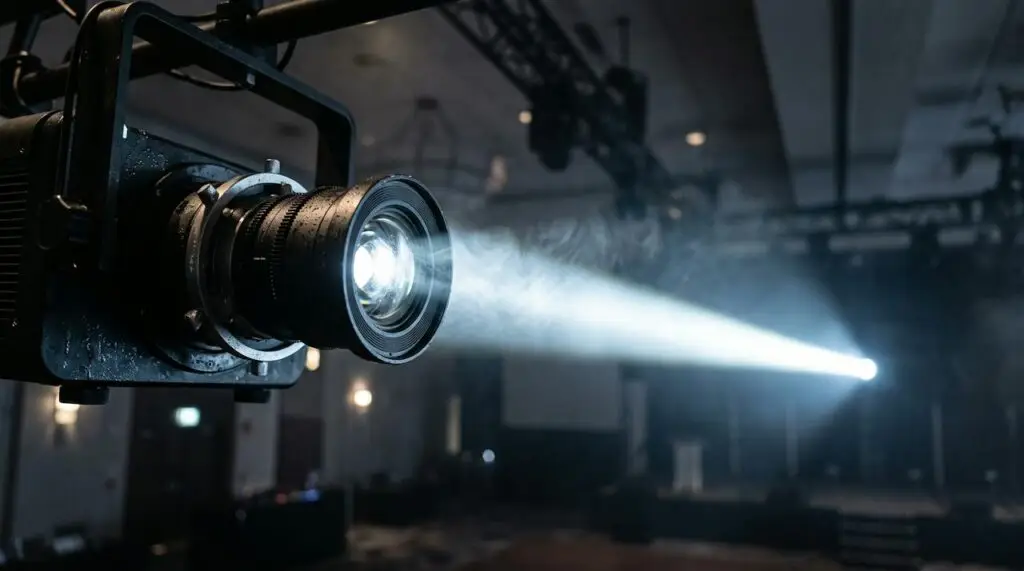
Ignoring ambient light. A ballroom with the chandeliers up will wash out a projected image no matter how bright the spec sheet reads. LED walls hold up better, at a higher cost and with more weight, power, and setup time.
No plan for switching sources. Five presenters with five laptops and no switcher means five awkward gaps while somebody hunts for an adapter.
Adding livestream late. A hybrid audience needs its own audio feed from the console, not a camera mic picking up room noise, plus someone watching the stream.
Lighting Mistakes That Leave Speakers in the Dark
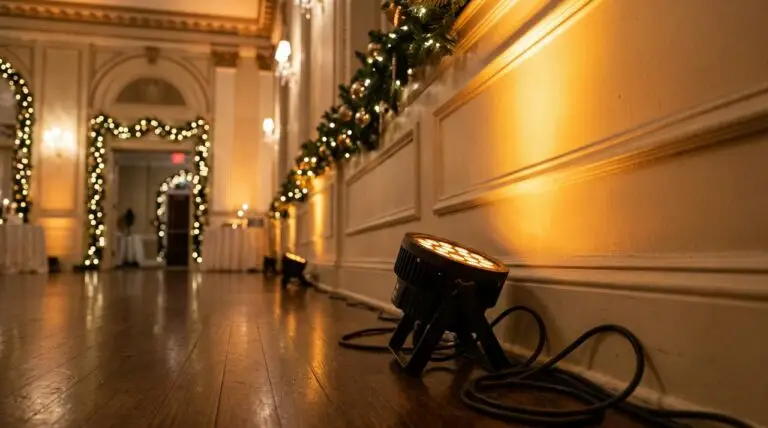
The most common lighting error is decorating the room without lighting the people. Uplighting along the walls photographs well and does nothing for the face at the lectern. Front light is what makes a speaker readable, and it matters more when cameras are involved, because a camera has far less latitude than the eye. Moving and theatrical lights let you isolate a presenter and change looks between segments, but only if someone programs those cues in advance.
Staging, Cable, and Power Problems at Load-In
Riser height is a sightline decision. Too low and the back of a flat floor room sees the backs of heads. Too high and you have built a climb for an older honoree. Cable across audience walkways needs ramps or taped pathways, planned before the first cable is pulled.
Power surprises people most. Plenty of outlets does not mean enough circuits, and a shared circuit is how a breaker trips during a keynote. Ask about panel access and available circuits early, especially in older buildings.
Schedule Mistakes: Access, Rehearsal, Run of Show
Venue access shapes everything else. If the room is booked until noon and doors open at 6, the setup window is fixed, and a production that takes eight hours to build does not fit. Rigging points, freight elevators, and dock access all affect how fast a crew moves.
A sound check confirms the system works. A rehearsal confirms the show works: the walk-on, the video roll, the handoff between speakers, the moment the lights change for the auction. Transitions are where live events fall apart. A written run of show keeps late changes from becoming surprises, and teardown deserves the same attention, since many venues have hard curfews.
What Changes at Outdoor Events
The outdoor mistakes are usually about timing. Noise ordinances and end times get checked after the lineup is set. Speaker stacks and lighting towers go up without enough ballast for the wind. Video gets planned as projection for a daytime show, when daylight makes it nearly impossible to see. Each one is easy to fix in planning and hard to fix on site.
Renting AV Equipment Without a Technician
Equipment-only AV rental can be a perfectly good choice when someone on your team already knows how to operate the system. A school with an experienced tech director, a church with a trained volunteer team, or a producer bringing a crew can rent gear and run it well.
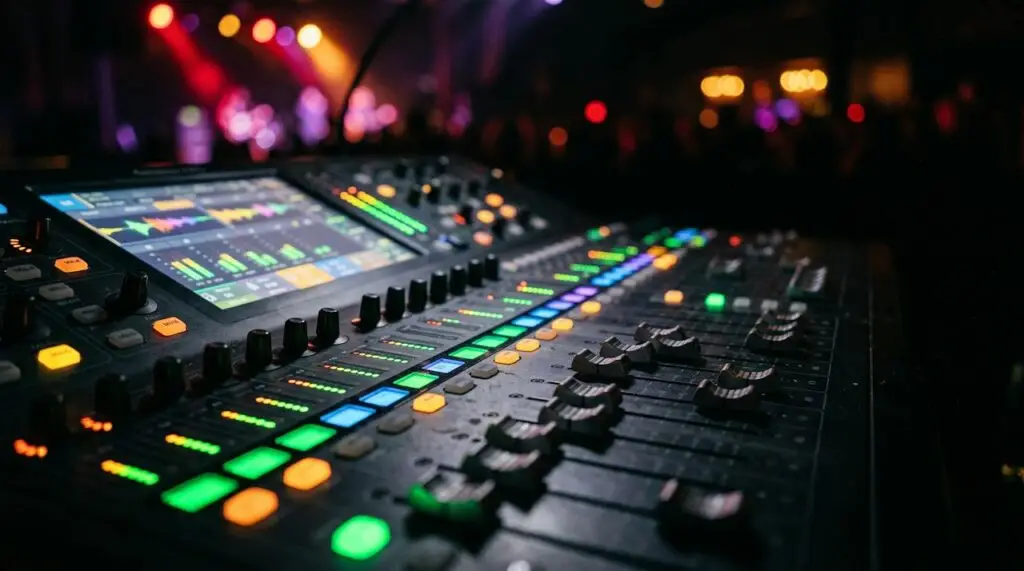
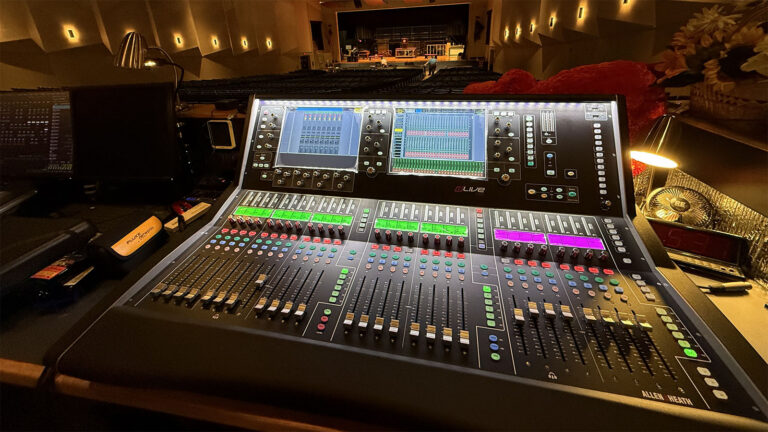
The mistake is renting a system nobody on site can operate. A digital console is deep, and learning it an hour before doors is not a plan. Before choosing professional AV equipment rentals over a crewed production, be honest about who will set it up, mix it, and pack it out. If the answer is unclear, full service live event production can be far less costly than dealing with technical problems during the event.
Two Habits That Prevent Most of This
Name one technical contact. Pick one person on your side who can make decisions during the event, so the crew is not waiting on a committee when something changes.
Send changes right away. A new video roll is a five-minute fix a week out and a scramble on show day.
Planning an Event in the Greater Philadelphia Area?
Avoiding event AV mistakes comes down to matching the production to the room, the audience, and the program, early enough that the answers still change things. That is how we approach conference production, AV production for school events, and gala and fundraiser production. Out Loud Productions serves Montgomery, Bucks, Philadelphia, Chester, and Delaware counties with nearly 30 years of combined AVL experience. Tell us about your upcoming event and we will build the plan around your specifics.