The date is locked, the venue is confirmed, and the invitations are close to going out. Then someone on the planning committee asks the question nobody has answered yet: who is handling sound, lighting, and video?
That question usually comes up later than it should. Most organizations book the room first, the caterer second, and production near the end, even though audio, video, lighting, and staging decisions shape your floor plan, your power needs, and your schedule for the day.
So how far in advance should you book event production services? Most of our clients book three to four months out. For dates in the busiest part of the year, many book closer to a year ahead, because a production company can only take on a few events each weekend and the best dates go first.
The Short Answer: Booking Windows at a Glance
These are the windows to hold your date with a production company. You do not need every detail finalized by then.
- Most galas, fundraisers, and single-day conferences: 3 to 4 months
- Festivals, outdoor community events, and multi-day conferences: 6 to 12 months
- Proms, graduations, and spring musicals: 6 months or more, and closer to a year for the most popular weekends
- Church special events and seasonal productions: 3 to 6 months
- Smaller assemblies, meetings, and single-room events: 6 to 10 weeks
- Dry hire equipment rentals: 3 to 6 weeks, longer for peak weekends
- Recurring annual events: the week after this year’s event ends
That last one is worth taking seriously. If you run the same gala or summer concert series every year, lock in next year’s date while the debrief is fresh. It is the easiest way to get the weekend you want.
Why Lead Time Changes What Your Event Can Actually Do
Production is not like catering, where you pick from a menu and timing mostly affects availability. The plan itself gets built during the lead time.
With a few months, someone can walk your venue, check the power, look at the sightlines, and design a system around your program. With nine days, the plan comes from a floor plan PDF and a phone call, and the crew solves the surprises on load-in day with whatever is on the truck.
Early booking also protects decisions that are expensive to reverse. Stage size affects your seating count. Speaker positions affect where tables go. A video wall changes your power draw and load-in path. These are easy conversations five months out and costly ones two weeks out, once the floor plan has already gone to the venue and the caterer.
How Far in Advance to Book by Event Type
The general windows shift depending on what you are producing.
School Events: Proms, Graduations, Assemblies, and Musicals
School dates cluster harder than any other category. Prom and graduation season compress into about six weeks, and neighboring schools often land on the same Friday and Saturday. If your event falls between mid-April and mid-June, start the conversation in the fall. If your graduation has an indoor rain plan, scope that setup at the same time.
The rooms vary as much as the dates. A gym graduation is an acoustically tough room where every name has to be understood, which is a different job than a spring musical with body mics and lighting cues. Our AV production for school events is scoped around the room first and the equipment second.
Conferences, Keynotes, and Corporate Meetings
A single-day conference usually fits the three to four month window. Multi-day events with breakout rooms need more, because each room needs its own audio, display, and often its own technician at the same time. If you plan to livestream, ask the venue about a dedicated hardwired internet connection the day you book the space, since that request can take weeks. See how we handle conference production.
Festivals and Outdoor Community Events
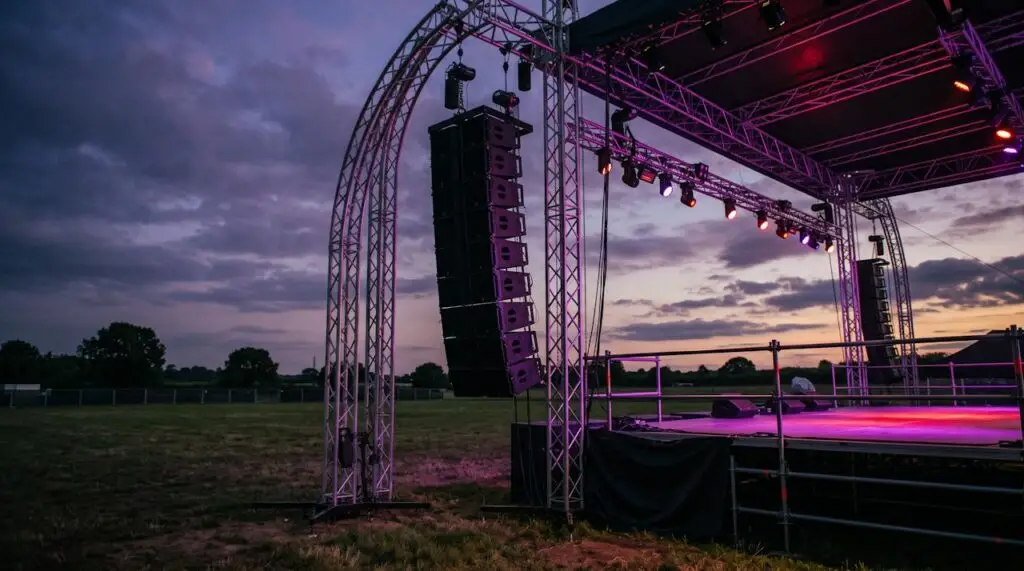
Six to twelve months is not conservative here. Permits, street closures, noise ordinances, generator sourcing, and staging that may need engineering documentation all take time. Many parks and town squares in Montgomery, Bucks, and Chester counties have limited power that gets shared with vendors and food trucks, so the power plan has to come early.
Weather is part of the booking window too. Temporary outdoor staging follows ANSI E1.21, the ESTA standard for temporary outdoor entertainment structures, so your event needs a written plan for high winds or lightning: who makes the call, by what time, and how the site gets cleared. That plan gets written during festival production services planning, not during the storm.
Galas, Fundraisers, and Awards Ceremonies
Three to four months works for most, with more lead time for spring and fall dates. These events look simple on paper and are dense in practice. The room handles cocktail hour, dinner, speakers, video, sometimes a live auction, and sometimes dancing, and each one needs different audio. Our gala and fundraiser production timelines also plan around a load-in that shares the room with the caterer.
Church Services and Special Events
Seasonal productions behave like theater. Christmas and Easter programs with staging, lighting looks, and multiple vocalists should be booked three to six months out, since those dates are fixed and every church in the region needs support on the same weekend.
What Happens Between Booking and Show Day
Here is the work that fills the lead time once your date is held.
The site visit. For an unfamiliar venue, this is the most valuable hour in the process. It answers what a floor plan cannot: ceiling height, where speakers can go, sightlines from the worst seat, where the electrical panels are, and how load-in works. Is there a dock? Will a road case fit in the elevator? A tight load-in path can add hours to setup, and those hours need to be in the plan.
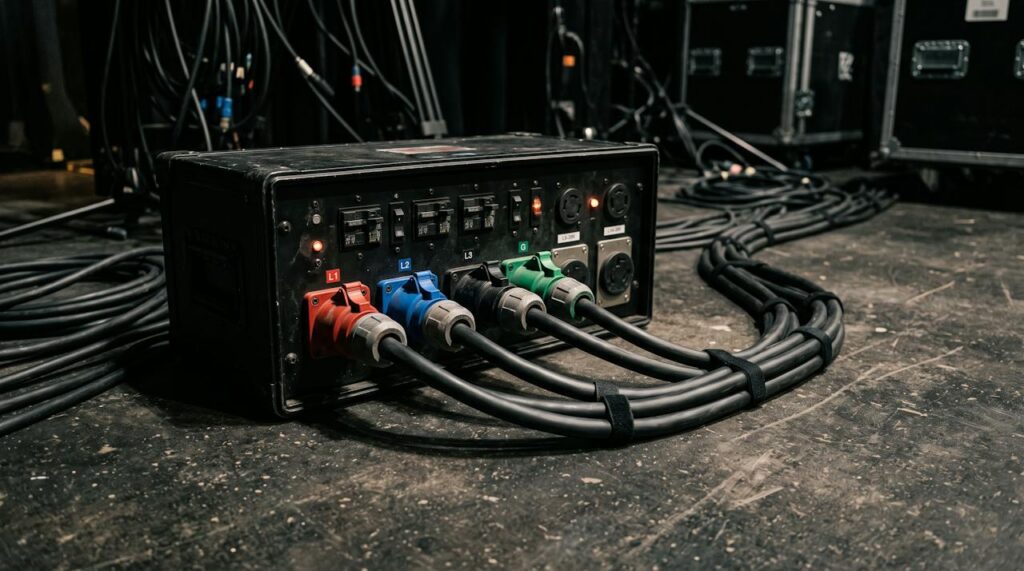
Power and cable paths. Most venue power problems come from shared circuits, not total capacity, so we find out which circuits feed what before anything gets plugged in. Cable paths get planned around walkways, accessible routes, and exits instead of improvised around the tables.
Run of show. This minute-by-minute document tells the crew who speaks, what plays, when lights change, and when each mic goes live. It is the difference between a program that moves and a room waiting while someone hunts for a handheld.
What Changes If You Book Late
Late booking is not a lost cause, but it helps to be honest about what changes.
- Your options narrow. The console, video wall, or lighting package you wanted may be out on another event, so the design gets built around what is available.
- Labor costs more. Short-notice crew calls and compressed load-ins that push into overtime cost more than the same work scheduled ahead.
- Rehearsal gets cut. Without a site visit, the crew solves surprises on site, and the practice run is usually the first thing to go.
With two to three weeks, a solid event is still usually possible if the scope is realistic. Prioritize audio first, because an audience that cannot hear has not really attended. Then video, if it is part of the program, then lighting, since a stage wash and basic front light do most of the work. Share the venue name early, since a room the crew has worked in before removes much of the risk. Our portfolio of past events shows the range of rooms we work in.
Peak Season in the Greater Philadelphia Area
Demand here is seasonal and predictable. Because a production company can only staff a few events each weekend, these windows fill first:
- April through mid-June: proms, graduations, spring galas, and early festivals overlap. This is when clients book closest to a year out.
- Late June through August: concert series and borough festivals fill most weekends.
- September through November: conferences, fundraisers, and fall festivals. October Saturdays go fast.
- December: holiday concerts, church productions, and corporate gatherings squeeze into about three weeks.
- January through March: the most open stretch, and a good time to plan spring events.
Full-Service Production or Dry Hire Rentals?
These run on different timelines, so it is worth deciding early.
With full-service live event production, a crew handles everything from planning through load-in, live operation, and teardown. The lead time is longer because you are booking people as well as equipment, and in return you get someone responsible for the room being right.
With dry hire AV equipment rentals, you take professional gear and run it yourself. Three to six weeks is usually enough, and it costs less. It works well when you have a capable staff or volunteer tech and a familiar setup. It works poorly when the person running it has never mixed the room and the event gets one shot. When you reserve, confirm that cables, stands, and power distribution are included, since those are easy to forget until setup.
What to Have Ready When You Reach Out
The more of this you have, the faster we can give you a useful answer:
- Date, start time, and rain date for outdoor events
- Venue and room, and whether it is booked yet
- Program format: speakers, live music, video, awards, auction, or a mix
- Load-in window and any hard end time
- A budget range, so the plan fits what you can spend
- What went wrong last time, if this is a recurring event
If all you have is a date and a rough idea, that is enough to start.
Frequently Asked Questions
Should we book a venue or a production company first?
Usually the venue, but talk to a production company before you sign if the event has real technical needs. Ceiling height, power, rigging rules, load-in access, and acoustics all affect what a room can support and what production will cost there.
What happens if our event date changes after we book?
Tell your production company as soon as you know. Date changes are common and often workable, but availability depends on the season and how much notice there is. Read the postponement terms before you sign, especially for outdoor events.
Talk to Us About Your Event Timeline
If you are planning an event in the Greater Philadelphia Area and trying to figure out when to lock in production, start with a conversation about your date, venue, and program. Our team’s nearly 30 years of combined AVL experience goes into building a plan around what your event actually needs, including telling you when a smaller setup will serve you better. Whether you are a year out or a few weeks out, tell us about your upcoming event and we will help you sort out the technical side.